
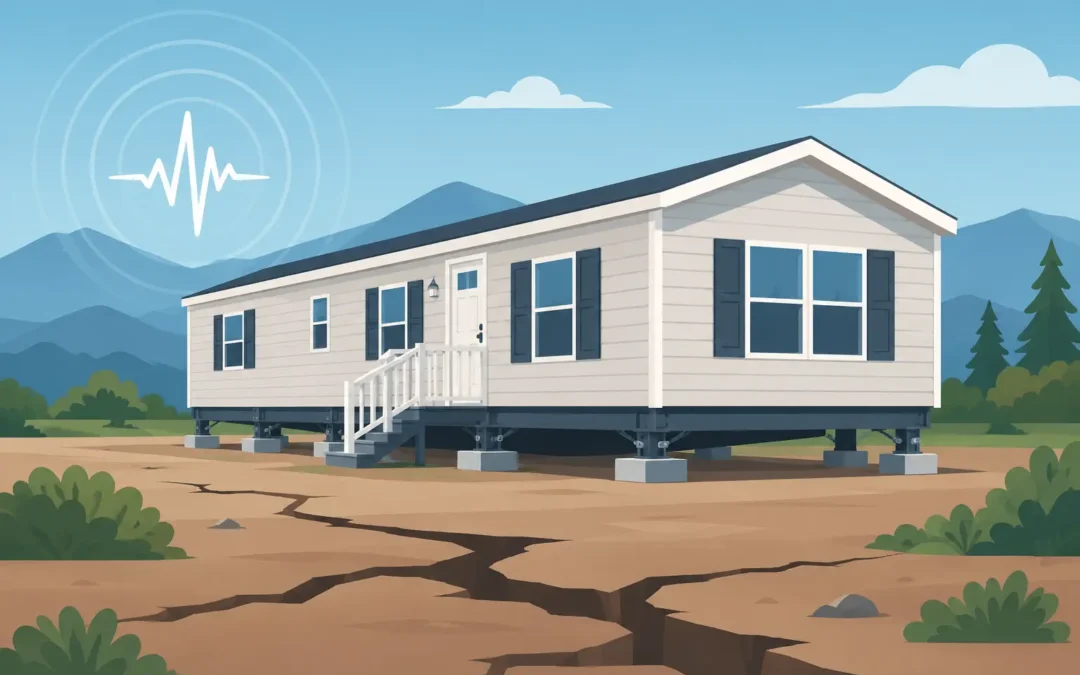
A strong earthquake does not test a home by appearance or square footage. It tests the connection between the home, its foundation system, and the ground beneath it. So, can mobile homes withstand earthquakes? Yes, many can perform well when they are properly built, installed, anchored, and maintained. But the answer is never a simple yes or no, especially in Southern California, where seismic activity is part of the ownership conversation.
For buyers considering a manufactured home, the practical question is not whether a home is earthquake-proof. No home is. The question is whether the specific home and installation meet current requirements for the site, soil conditions, and local jurisdiction – and whether the home has the right support system to limit movement during shaking.
Can Mobile Homes Withstand Earthquakes?
Modern manufactured homes are designed to meet federal construction standards, commonly called HUD Code standards. These standards cover structural design, materials, wind resistance, fire safety, energy efficiency, plumbing, electrical systems, and other core components. For homes installed in seismic areas, the installation details matter just as much as the home itself.
A manufactured home is built in a factory, transported to the property or community, and secured at its final location. That last step is critical. The home needs an engineered foundation or approved support system, properly placed piers, anchors or tie-downs, and connections designed for the conditions at that site.
A well-installed newer manufactured home can be a sensible housing choice in earthquake country. However, an older home with outdated tie-downs, deteriorated supports, unapproved additions, or a poorly maintained foundation system may be more vulnerable to damage. Age alone does not tell the full story, but it should prompt a closer inspection.
Mobile homes and manufactured homes are not always the same
Many people use the term mobile home for every factory-built home. In everyday conversation, that is understandable. Technically, homes built before June 15, 1976 are generally called mobile homes, while homes built after that date are manufactured homes built to federal HUD Code standards.
That distinction can matter when evaluating earthquake readiness. A newer manufactured home may have more current structural requirements and installation options than a much older home. Still, every home should be evaluated based on its actual condition, installation history, and local requirements.
What Helps a Manufactured Home Handle Earthquake Shaking?
Earthquake performance is mostly about controlling movement. During a quake, the ground shifts quickly in different directions. A home that is properly supported and connected to its foundation system has a better chance of staying in position and avoiding severe structural damage.
Several factors work together.
Proper anchoring and tie-downs
Anchors and tie-downs secure the manufactured home to the ground or foundation system. They help resist sliding, uplift, and excessive side-to-side movement. The right anchoring system depends on the home, the installation type, soil conditions, and local code requirements.
Anchors are not a one-time item to forget about after move-in. Metal components can corrode, straps can loosen, and ground conditions can change over time. Regular inspection is especially worthwhile for older homes and homes in areas with drainage issues, expansive soil, or prior movement.
A suitable foundation and support system
Manufactured homes may be installed on permanent foundations or on approved support systems using piers, footings, and engineered components. The best option depends on the property, financing goals, the type of home, and the requirements of the local building department.
The foundation must transfer the home’s weight safely into the soil while also working with the anchoring system. If the soil is weak, uneven, poorly drained, or prone to shifting, the installation may require additional engineering. Cutting corners here can create problems that only become visible after a heavy rain, soil settlement, or earthquake.
Correct installation by qualified professionals
A quality home can still be compromised by poor installation. Leveling, pier placement, connection details, utility hookups, and perimeter conditions all affect how a home performs over time.
This is why buyers should view transportation and installation as part of the home purchase, not as an afterthought. Moving a factory-built home and setting it correctly requires planning, permits, site preparation, and professionals who understand the applicable requirements. A free estimate should account for those real project needs rather than focusing only on the price of the home itself.
A simple, well-maintained structure
Add-ons can change how a home responds to shaking. An attached porch, room addition, awning, carport, deck, or enclosure may need its own support and seismic connection details. If an addition is improperly attached, it can pull against the home or fail separately during an earthquake.
Homeowners should also watch for soft spots in floors, cracked skirting, doors that suddenly stick, gaps around exterior walls, damaged piers, or standing water under the home. These signs do not automatically mean the home is unsafe, but they are good reasons to call a qualified inspector or contractor.
What Buyers Should Ask Before Purchasing
In Southern California, asking earthquake-related questions early can save time, stress, and unexpected expense later. Whether you are purchasing a home in a manufactured home community, replacing an older unit, or placing a home on private property, get clear answers before committing.
Ask when the home was built, whether it has been moved before, what foundation or support system it will use, and who is responsible for permits and installation. If it is an existing home, ask whether the anchors and piers have been inspected recently and whether any structural repairs or additions were completed with permits.
You should also ask about the site itself. Is the property in an area with known soil movement, slope concerns, flood exposure, or special local requirements? A home on a level, well-prepared site may have a different installation scope than one on a hillside or a lot that needs grading and utility work.
For buyers using financing, the foundation type may affect loan options. Permanent foundation requirements can differ by program and lender, so it is smart to discuss this early rather than discovering a mismatch after selecting a home.
Earthquake Preparedness After You Move In
The home installation is the first layer of safety. Everyday preparedness is the next. Keep heavy furniture secured to wall studs, store breakable items in latched cabinets, know how to shut off utilities if necessary, and keep an emergency kit where everyone in the household can reach it.
If your manufactured home has flexible utility connections, inspect them according to the manufacturer’s guidance and local requirements. Gas, water, and electrical connections deserve attention because utility damage can create hazards after shaking. Never attempt repairs to gas lines or major structural components on your own.
It also helps to have a household plan. Decide where family members will meet, keep shoes and a flashlight near each bed, and make sure everyone knows how to exit safely if doors become blocked. For multigenerational households, plan around the needs of children, older adults, pets, and anyone with mobility limitations.
When an Older Home Needs an Upgrade
An older mobile or manufactured home does not automatically need to be replaced. In some cases, a professional inspection may identify practical upgrades such as new anchors, improved supports, repaired footings, drainage corrections, or better utility connections.
In other cases, replacement can be the more cost-effective path, particularly when the home has extensive age-related wear, repeated foundation issues, or an outdated layout that no longer works for the family. A new manufactured home can offer modern floor plans, improved energy features, and a fresh installation designed for the current site requirements.
That is where working with a local dealer can simplify the process. Mobile Home Factory can help Southern California buyers explore available home options, floor plans, transportation considerations, financing guidance, and the details that affect a successful installation. English and Spanish support can make the process easier for families comparing ownership options against rising rent.
An earthquake should not stop you from considering manufactured homeownership. It should motivate you to ask better questions, choose a properly installed home, and protect the place your family is working hard to call home.