
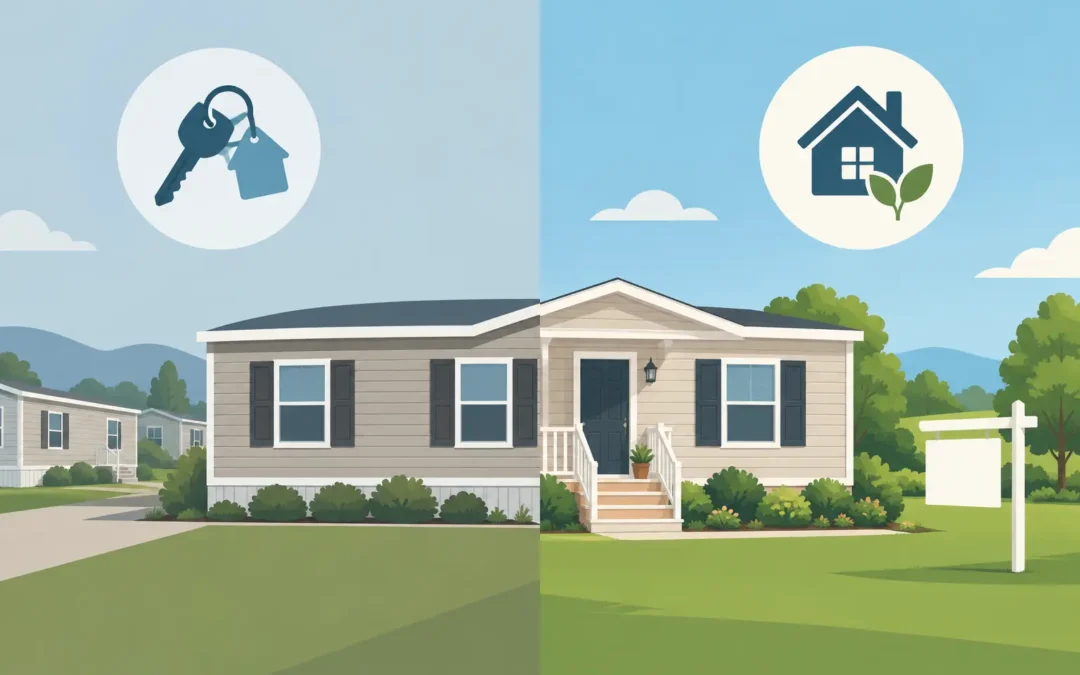
A rent increase can change a family’s plans in one notice. That is why renting versus buying a manufactured home deserves more than a quick comparison of monthly payments. In Southern California, the better choice depends on how long you expect to stay, whether you have a place for the home, what financing you can qualify for, and how much control you want over your housing costs.
A manufactured home is not automatically the right answer for every renter. It can, however, create a realistic route toward ownership for buyers who have been priced out of a conventional site-built home. The key is to compare the complete picture, including space rent or land costs, utilities, maintenance, financing, and your long-term goals.
Renting Versus Buying a Manufactured Home: The Core Difference
Renting usually offers a simpler start. You pay a security deposit, sign a lease, and move in without taking responsibility for major repairs or resale. That flexibility matters if your job, family situation, or preferred neighborhood may change soon.
Buying a manufactured home asks for more planning upfront, but it can give you a home that is yours. Instead of paying only for the right to occupy a property, your monthly payment may build equity in the home over time. You can select a floor plan that fits your household, make many improvements within community and local rules, and have more say in how your space looks and functions.
The word “buying” needs one important clarification: you may buy the home while leasing the space beneath it in a manufactured home community. Or, you may place the home on land you own or are purchasing. Those are very different ownership situations, and the ongoing costs should be compared carefully.
Start With the Monthly Cost, But Do Not Stop There
Many buyers begin with a mortgage or chattel loan payment and compare it with current rent. That is useful, but it is only the first step. A renter’s monthly housing cost may include rent, renters insurance, parking, pet fees, and utilities. A manufactured-home owner may have a loan payment, space rent or land payment, homeowners insurance, property taxes, utilities, and a reserve for maintenance.
If the home will be located in a community, ask for the current space rent and find out what services are included. Water, trash, sewer, landscaping, and amenities can vary from one community to another. Also ask how space-rent increases are handled. A lower home payment can lose its advantage if the community’s monthly space rent is outside your comfort zone.
If you own the land, you avoid space rent, but you take on land-related responsibilities. Those may include site preparation, utility connections, permits, grading, septic or sewer work, property taxes, and ongoing exterior maintenance. Land ownership can offer greater control and a stronger long-term ownership position, but it is rarely a simple add-on to the price of the home.
The practical question is not, “Can I make the payment this month?” It is, “Can I comfortably carry the full housing cost if utilities rise, a repair comes up, or my income changes?” A clear monthly budget is one of the best tools a first-time buyer can bring to the process.
What Ownership Can Give You That Renting Cannot
The biggest reason to buy is not just to leave a rental. It is to gain a stake in your home. Each payment may help you reduce the balance you owe, depending on the financing terms, while a renter does not build ownership in the property.
Ownership can also make daily life feel more settled. Families often want room for children, relatives, pets, hobbies, or a home office without needing permission for every small change. Modern manufactured homes are available in many layouts, from efficient single-section homes to larger multi-section designs with multiple bedrooms, open living areas, and features that work well for multigenerational households.
That said, equity is not guaranteed, and buyers should be careful with promises that suggest every home will increase in value. The home’s condition, location, age, community rules, local market demand, and whether land is included can all affect resale. Buying should be viewed as a housing decision first, with potential financial benefits that depend on the details.
When Renting May Still Be the Smarter Move
Renting can be the better choice when your timeline is short. If you expect to relocate in a year or two, selling a home, arranging its move, or finding a buyer may be more work and expense than you want. A lease may give you a cleaner exit.
It can also make sense to rent while you improve your financial position. Building savings for a down payment, paying down high-interest debt, correcting credit-report errors, or establishing a more stable income history can improve future financing options. Rushing into a purchase without an emergency cushion can turn an exciting purchase into unnecessary pressure.
Renting may be preferable if you do not want responsibility for repairs. Manufactured homes need care just like any other home. Roof maintenance, HVAC servicing, plumbing repairs, skirting, decks, and appliances can all require attention. Newer homes may reduce near-term repair needs, but no homeowner should budget as if maintenance will never happen.
Financing Changes the Comparison
Financing is often where the rent-versus-buy decision becomes real. Manufactured-home financing may be structured differently based on whether you are buying the home alone, purchasing land with the home, or placing it on property you already own. The down payment, interest rate, loan term, and closing costs can vary significantly.
Before shopping strictly by advertised price, ask what type of financing may fit your situation. Then compare payment estimates using realistic numbers. Include insurance and expected site or community costs. A longer loan term may lower the monthly payment, but it can increase the total amount paid over the life of the loan. A larger down payment can reduce what you borrow, but it should not drain every dollar you have in reserve.
For many Southern California buyers, financing guidance is especially valuable because conventional home prices can make ownership feel out of reach. A manufactured home may lower the entry point, but affordability still depends on matching the home, location, and loan structure to your actual budget.
Community Living or Private Land?
This decision deserves its own conversation because it affects both lifestyle and cost. A manufactured-home community can offer an established location, existing utility connections, and neighbors nearby. It may also have age restrictions, pet policies, parking limits, exterior standards, and approval requirements. Read the community rules before committing to a home.
Private land can provide more privacy and flexibility. It may be especially appealing for buyers creating housing for family members or adding a guest-house solution on eligible property. But private land involves zoning, setbacks, access, foundation requirements, utility availability, permits, and transportation planning. Not every parcel can accept every home.
Transportation and installation are not afterthoughts. A home must be selected with the site in mind. Road access, lot dimensions, overhead clearance, slope, and local requirements can affect what is possible and what it costs. Addressing these issues before purchase prevents expensive surprises later.
Questions to Answer Before You Choose
Give yourself honest answers to these four questions:
- How long do I expect to live in this location?
- Can I afford the total monthly cost, not only the loan payment?
- Do I want the flexibility of a lease or the responsibility and control of ownership?
- Will the home be in a community, on land I own, or on land I still need to secure?
You should also consider your household’s next five years. A one-bedroom rental may work today but not after a new child, an aging parent moving in, or a permanent work-from-home change. On the other hand, buying more home than you need can strain a budget that would be better protected by flexibility.
Make the Decision With Real Numbers
The best comparison puts your current rental costs next to a complete manufactured-home ownership estimate. Include the upfront costs as well as the monthly ones. Ask for clear pricing on the home, delivery, installation, site work when applicable, and estimated financing. If you are considering a community, review its lease agreement and rules before treating the home as a final purchase.
Mobile Home Factory helps Southern California buyers explore floor plans, available homes, financing guidance, and the transportation-related details that can shape a purchase. Bilingual English and Spanish support can make it easier for families to ask the questions that matter before they commit.
Homeownership is not about winning a debate against renting. It is about choosing a housing path that gives your household stability without stretching it too far. If ownership is on your horizon, start with a free estimate and a realistic conversation about the home, location, and payment that fit your plans.