
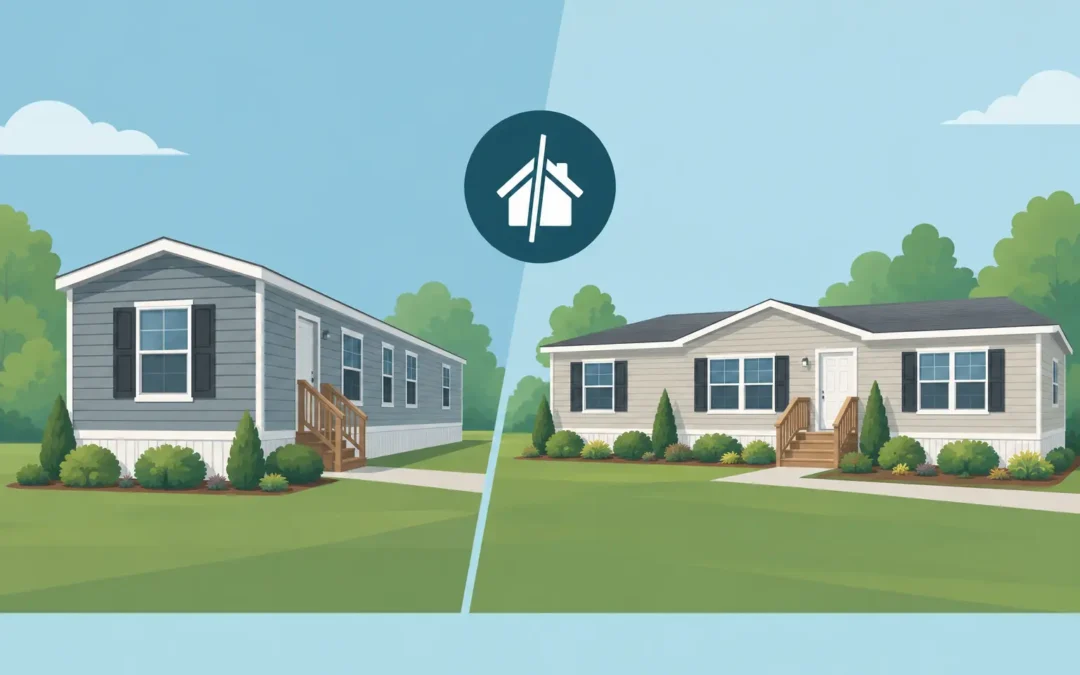
A home can look affordable on paper and still be the wrong fit if the bedrooms feel tight, the lot cannot accommodate it, or the delivery path creates a surprise. That is why the single wide versus double wide decision deserves more than a quick comparison of square footage. For Southern California buyers, it is a practical choice about budget, household needs, land or park requirements, and how soon you want to move toward ownership.
A single wide may be the right answer for a first-time buyer, a smaller household, or a property that has limited space. A double wide can offer the room and layout flexibility that growing families and multigenerational households need. Neither is automatically better. The best manufactured home is the one that works for your site, your monthly budget, and the way you actually live.
Single Wide Versus Double Wide at a Glance
The basic difference is width and how the home is transported. A single wide is built as one transportable section. It is generally narrower and arrives as one piece. A double wide is built in two sections, transported separately, and joined together at the home site.
That construction difference affects much more than the appearance of the home. It can influence floor plan options, setup requirements, transportation costs, available interior space, and where the home can be placed. In many cases, single wide homes are a more budget-conscious starting point, while double wide homes create a more traditional residential feel with larger common areas and more separation between bedrooms.
The right comparison starts with the total project, not only the advertised home price. Delivery, installation, site work, utility connections, permits, foundation requirements, park rules, and financing all deserve a place in your planning.
When a Single Wide Makes Sense
A single wide manufactured home can be a smart path to ownership when efficiency matters most. Its narrower footprint can be helpful on certain sites, and its one-section design may simplify transportation compared with a larger multi-section home. For buyers replacing an older home in a mobile home park, that footprint can be especially relevant because space and access may already be defined.
Inside, a well-designed single wide can feel far more comfortable than buyers expect. Modern floor plans can include open living areas, a functional kitchen, bedrooms at opposite ends of the home, and storage designed for everyday use. The key is choosing a plan that matches your routine rather than assuming you need more square footage than you will use.
A single wide often works well for an individual, a couple, a small family, or someone planning a guest-house-style living solution where local zoning and permitting allow it. It can also appeal to buyers who want to control the purchase price and avoid continuing to put large monthly payments toward rent.
There are trade-offs. Narrower rooms can limit furniture placement, hallways may feel more compact, and larger households can outgrow the home quickly. If you frequently host family, work from home, or need space for children and grandparents under one roof, a single wide may require more compromise than you want.
Why Buyers Choose a Double Wide
A double wide is often chosen for one simple reason: room to live. By combining two sections, these homes usually provide a wider layout, larger living spaces, more kitchen storage, and greater flexibility with bedroom placement. Many buyers prefer the feeling of walking into a wide living room or kitchen rather than entering a long, narrow layout.
For families, a double wide can create useful separation. Parents may want a primary bedroom on one side of the home and additional bedrooms on the other. A multigenerational household may need an extra bedroom, a second living area, or enough dining space for everyone to gather without feeling crowded. Those daily details matter more than a floor plan photo.
Double wide homes can also offer more choices in layouts and finishes. Depending on the manufacturer and model, buyers may find kitchen islands, utility rooms, walk-in closets, family rooms, and four-bedroom options that are difficult to fit into a single-section design. Skyline Homes and Champion Home Builders offer established manufactured-home product lines with options worth comparing based on your preferred layout and price range.
The trade-off is that a double wide generally requires more budget and more site planning. Because it is delivered in two sections and assembled on site, transportation and installation need to be coordinated carefully. A narrow street, a steep driveway, overhead lines, or a restricted park entrance can affect whether a particular home is practical for a specific location.
Compare the Full Cost, Not Just the Home Price
The lower purchase price of a single wide can make it attractive, but buyers should avoid treating it as the whole cost of ownership. The same is true for a double wide with a larger floor plan. Before selecting either option, ask for a clear estimate that separates the home itself from the work needed to make it move-in ready.
Your total budget may include transportation, installation, foundation or pier requirements, permits, utility hookups, steps, skirting, grading, and any site-specific work. If you are placing a home in a community, there may also be space rent, park approval requirements, age restrictions, pet rules, or home-size standards. If you are placing a home on private property, county and city regulations can be different from one neighborhood to the next.
Financing is another major piece of the decision. The right financing route can depend on whether you own the land, are purchasing in a mobile home park, are replacing an existing home, and how the home will be titled. Monthly affordability is not only about the loan payment. Include insurance, utilities, site rent if applicable, and the amount you need for setup.
A good dealer conversation should make those questions easier, not more confusing. Ask what is included, what is estimated, what depends on the site, and what steps come before delivery. Clear expectations protect your budget.
Start With Your Site and Household
Before falling in love with a floor plan, look at where the home will go. This is especially important across Los Angeles County, the San Fernando Valley, Orange County, Riverside County, San Bernardino County, and San Diego County, where site conditions and local requirements can vary widely.
Measure the available space, but do not stop there. Access for delivery is just as important. The transporter may need room to turn, clear routes around trees or structures, and safe passage beneath utility lines. A home that fits on the lot may still need a different plan if it cannot be delivered to the site.
Then consider the household honestly. Think about the number of people living in the home now, as well as likely changes in the next several years. A compact two-bedroom single wide may be a strong value for a couple. A family with children, a home-based business, or relatives moving in may be better served by a double wide with extra bedrooms or a flexible living area.
Questions to Ask Before You Choose
The most useful questions are the ones tied to your real situation. Ask whether the selected home is approved for your park or property, what delivery and installation may involve, and whether the floor plan fits your furniture and daily routine. If you are replacing a home, ask whether removal of the existing unit needs to be coordinated before the new home arrives.
It also helps to ask about available homes versus homes that must be ordered. Available inventory may support a faster timeline, while an ordered home can give you more freedom in layout, color selections, and features. Neither route is always best. It depends on how quickly you need housing and how specific your wish list is.
For Spanish-speaking buyers, getting answers in the language you are most comfortable using can make a complex purchase feel far more manageable. You should be able to discuss floor plans, financing questions, transportation needs, and next steps clearly before making a commitment.
Choose the Home That Moves You Forward
A single wide can be an efficient, attainable first step into ownership. A double wide can provide the space and flexibility that makes a home work for a larger household over time. The better choice is not the biggest one or the least expensive one. It is the home that fits your location, your budget, and the life you are building.
Mobile Home Factory can help Southern California buyers compare floor plans, review available options, discuss financing guidance, and plan around transportation or removal needs. Call for a free estimate and bring your site details, household needs, and budget questions. A clear conversation now can put you closer to a home that feels like a real move forward, not another temporary stop.