
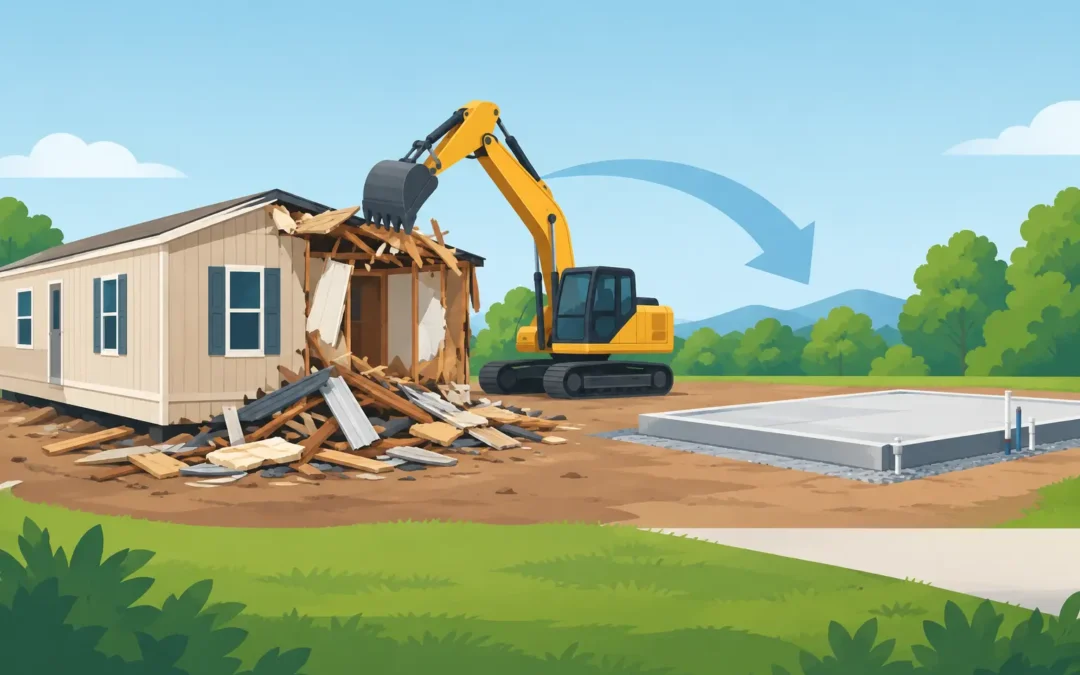
An aging mobile home can make a property feel stuck: repairs keep coming, the layout no longer works for your family, and rent or land costs continue every month. Mobile home teardowns can clear the way for a new manufactured home, a larger floor plan, or a better long-term ownership decision. But removing an old home is not a simple one-day demolition job. The details behind the home, the site, and local approvals matter before you order its replacement.
For Southern California buyers, the best time to plan removal is before choosing a new home. That gives you a clearer budget, helps avoid delivery delays, and lets you confirm whether the space can support the home you want.
What Mobile Home Teardowns Actually Involve
The word “teardown” is useful, but the work can take several forms. Some older mobile homes are demolished on site and hauled away in pieces. Others can be transported whole if their condition, dimensions, route, and destination make that practical. In many cases, the home is disconnected, carefully separated from additions, then removed by a licensed crew.
The right method depends on the age and condition of the home, whether it is located in a mobile home park or on private land, access for trucks and equipment, and local requirements. A deteriorated home with extensive add-ons, damage, or unsafe materials may need a different approach than a home that can still be moved.
Do not assume the old home will simply roll away because it once arrived on wheels. Skirting, porches, decks, carports, utility connections, foundations, and years of site modifications can make removal more involved. A site inspection helps identify those issues early.
Start With the Property Rules, Not the New Floor Plan
It is exciting to look at new manufactured home designs first. Still, the property rules should guide the decision. A beautiful home is only useful if it can be delivered, installed, and approved at the location.
If the Home Is in a Park
Mobile home parks usually have their own replacement rules. Management may require written approval, review the age and appearance of the incoming home, set standards for roofing or exterior features, and confirm that the home fits the space. They may also coordinate timing for removal and installation to limit disruption for neighbors.
Ask the park early about the maximum home size, setbacks, required improvements, utility requirements, and whether the space needs upgrades before a replacement can be installed. If you are buying an existing home in a park with plans to replace it, verify the park’s policy before you close. A replacement plan that looks affordable on paper can change if the park will not accept the size or model you expected.
If the Home Is on Private Land
Private land offers more flexibility, but it also brings more responsibility. County or city requirements may cover demolition permits, grading, utility disconnections, foundation standards, setbacks, septic systems, fire safety, and access. Rules vary across Los Angeles County, Ventura County, Orange County, Riverside County, San Bernardino County, and San Diego County, so a neighboring property may not be a reliable comparison.
You should also confirm zoning and the legal use of the property. If you are replacing a home on land that has been used by family for decades, paperwork, permits, and site conditions may still need to be brought current. That is not always a deal breaker, but it should be understood before money is committed to a new home.
Build a Realistic Removal Budget
The cost of removing an old mobile home is more than the demolition or transport quote. A complete estimate should account for the condition of the home and the work needed to prepare the site for its next use.
Common cost areas include permits and inspections, utility shutoffs, disconnection of gas, water, sewer, and electric service, removal of decks or carports, hauling and disposal, and site cleanup. If the property needs new foundation work, drainage improvements, utility upgrades, or repairs to a driveway or pad, those costs should be discussed separately from the teardown.
Older homes can also create material-handling concerns. Certain materials may require testing, special handling, or disposal procedures. A reputable removal contractor should explain what is included, what is excluded, and what could change the price once work begins. The lowest quote is not always the most useful quote if it leaves utility work, permits, or debris behind for you to solve.
Ask for the estimate in writing and review the scope carefully. You want to know whether the crew will remove the entire structure, detach and dispose of additions, cap or disconnect utilities as required, haul debris, and leave the site ready for the next construction phase.
Utility Disconnections Need Careful Timing
Utilities are one of the biggest reasons a teardown schedule can slip. Electricity, gas, water, sewer, propane, cable, and phone lines all need to be identified. Some can be disconnected quickly. Others require coordination with the provider, local agency, or park management.
Do not turn off services too early if you still need access to the home for final belongings, inspections, or contractor work. At the same time, do not wait until demolition day to start the process. The goal is a coordinated sequence: approvals, disconnects, removal, site preparation, delivery, installation, and final connections.
If the old home is your current residence, make a temporary housing plan as part of the timeline. Replacement projects move faster when there are no last-minute decisions about where the family will stay or where belongings will go.
Prepare the Site for the Home You Want Next
A teardown should not only remove what is old. It should prepare the property for what comes next. Before selecting a replacement home, evaluate access from the street, turning space for delivery, overhead obstructions, slope, drainage, and the condition of the pad or foundation area.
This is especially relevant in hillside communities, tighter Los Angeles-area neighborhoods, and lots with mature trees, narrow driveways, or overhead lines. A floor plan that fits the lot dimensions may still be difficult to transport or set if access is limited. In some situations, a slightly different home width, roof configuration, or placement plan can save significant time and expense.
Think about how your household will use the new space as well. A growing family may prioritize additional bedrooms. A multigenerational household may need a layout with separated living areas. Property owners considering a guest house or additional dwelling space may need to review local rules before deciding whether replacement or a separate project makes more sense.
Choose a Team That Can Coordinate the Moving Parts
A successful replacement project involves more than picking a home from a brochure. You may need a dealer, removal crew, transporter, installer, utility providers, park management, inspectors, and financing guidance. The exact team depends on the property, but coordination is what keeps one delayed step from affecting everything else.
Mobile Home Factory helps Southern California buyers explore available homes, floor plans, transportation-related needs, and the practical questions that come with replacing an older home. The earlier you start the conversation, the more time there is to match the home choice with the removal plan and site conditions.
Bring basic property information to your first discussion: the address, whether the home is in a park or on private land, approximate age and size of the existing home, photos of access points and additions, and any known utility or permit history. You do not need every answer before asking for help. Those details simply make an initial estimate and planning conversation more productive.
When a Teardown May Not Be the Best Answer
Replacement is often a strong path when the current home has major structural issues, outdated systems, an impractical layout, or repair costs that no longer make financial sense. A new manufactured home can provide more efficient systems, current design options, and a clean starting point for ownership.
Still, it depends. If the existing home is structurally sound and the needed work is limited, renovation may cost less than removal and replacement. If park rules restrict incoming homes or the property requires expensive utility and site upgrades, the project may need a different budget or timeline. A good decision comes from comparing the full cost of keeping, renovating, removing, and replacing – not from looking at one repair bill alone.
Before you commit to mobile home teardowns, get clear on the site, the approvals, and the replacement plan. Once those pieces are lined up, an old home does not have to be the end of your options. It can be the first step toward a home that fits your family, your property, and your goals far better.