
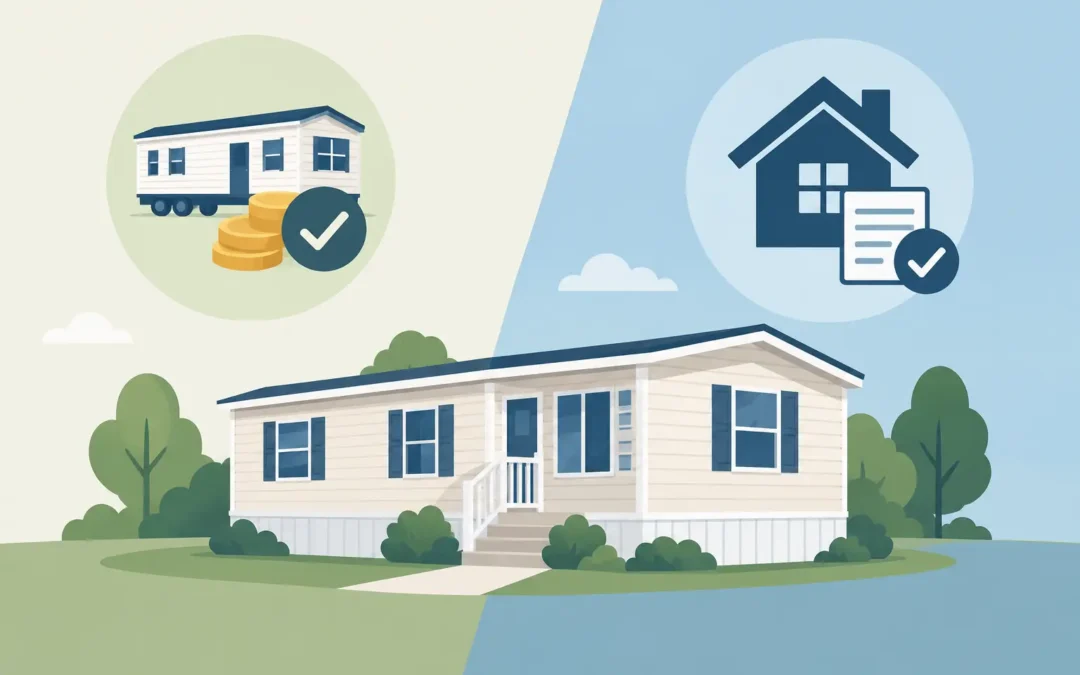
A manufactured home can be a practical way to move from paying rent to building a place of your own. But before choosing a floor plan, buyers need to understand one decision that affects the monthly payment, closing process, and long-term options: chattel versus mortgage loans.
The right financing path depends less on the home itself than on where it will sit and how the land is owned. A home in a land-lease community may be financed very differently from a home placed on property you own in the San Fernando Valley, Ventura County, or elsewhere in Southern California. Knowing the difference early can help you shop with a realistic budget and avoid surprises later.
What Is a Chattel Loan?
A chattel loan finances the manufactured home as personal property. Think of it more like financing a vehicle or other titled asset than financing a traditional house and land together. The lender uses the home itself as collateral, while the land is not part of the loan.
This is a common financing option when the home will be located in a manufactured-home community where you lease the space. You may own the home, but you pay monthly space rent to the community owner. Because you do not own the underlying land, there is generally no land-and-home package for a conventional mortgage to cover.
Chattel financing can also apply in other situations where the home is not being permanently converted into real property. The exact rules vary by lender, property type, title status, and California requirements, so buyers should ask about their specific site before assuming a loan type will work.
Why buyers choose chattel financing
The biggest advantage is fit. If you have found a home in a park with a location, community features, and space rent that work for your household, chattel financing may be the appropriate route to ownership. The approval and closing process can also be more straightforward than a land-and-home mortgage because there is no real estate parcel to appraise, insure, and transfer as part of the transaction.
That simplicity does not automatically mean a lower monthly cost. Chattel loans often have shorter repayment terms and may carry higher interest rates than certain mortgage programs. A shorter term can mean a larger principal-and-interest payment, even when the home price is lower than a site-built home.
Buyers should look at the full monthly housing number: loan payment, space rent, utilities, homeowner insurance, taxes or registration-related costs, and any community fees. A lower home price is helpful, but it should be considered alongside the ongoing cost of leasing the site.
What Is a Mortgage Loan for a Manufactured Home?
A mortgage loan typically finances the home and the land together as real property. In this setup, the manufactured home is usually installed on land you own, placed on an approved permanent foundation, and titled or recorded according to the applicable process. The lender has a lien on the real estate, not just the home.
For many buyers, this is the more familiar ownership model. You purchase a lot or use land already owned by you or your family, then place a new manufactured home on that property. Depending on the loan program and borrower qualifications, mortgage financing may offer a longer term than chattel financing.
A mortgage can be especially worth exploring when you are planning a primary residence on privately owned land, replacing an older home on a family parcel, or creating housing for a multigenerational household. It may also be part of the conversation for property owners considering a guest house or additional living space, though financing and local approval requirements differ significantly by project.
The trade-off: more steps before closing
Mortgage financing can bring attractive long-term possibilities, but it usually involves more moving parts. The lender may review the land, home installation plan, foundation, access, utility connections, appraisal, title work, permits, and insurance. If you are buying land and a home at the same time, those pieces need to line up.
In Southern California, site preparation can have a major effect on the budget. Grading, utility extensions, septic systems where applicable, fire requirements, local permits, transportation access, and foundation work can add costs beyond the price shown for the home. A good financing conversation includes the complete project, not only the base home price.
Chattel Versus Mortgage Loans: The Key Differences
The clearest difference is land ownership. A chattel loan generally finances the home only. A mortgage loan generally finances both the home and land as one real estate purchase.
That difference affects several other parts of the transaction. Chattel loans may close faster in the right situation and are often used for homes in leased-land communities. Mortgage loans may offer longer repayment periods, but they require a property and installation arrangement that meet lender standards.
The collateral is also different. With chattel financing, the home itself secures the loan. With mortgage financing, the land and home together secure the loan. This distinction matters if you later plan to sell, refinance, move, or make major changes to the property.
Neither option is automatically better. A buyer who wants the convenience and community setting of a land-lease park may find chattel financing is the practical choice. A buyer with buildable land, or a plan to purchase land, may prefer to explore mortgage options that treat the home as part of a long-term real estate investment.
How to Decide Which Loan Fits Your Plan
Start with the question that determines everything else: Do you own the land where the home will go? If the answer is no and you are buying into a community with leased spaces, ask about chattel financing and confirm the community’s requirements. Review the space-rent history, park rules, age restrictions if any, pet policies, and approval process before committing to a home.
If you own land or are planning to buy it, ask whether the home can qualify for mortgage financing once installed. This is also the time to verify zoning, setbacks, utility availability, road access for delivery, local permits, and foundation requirements. A beautiful floor plan does not solve a site that cannot accommodate it.
Then compare complete loan estimates rather than focusing only on the interest rate. Look at the down payment, loan term, monthly principal and interest, closing costs, lender fees, insurance requirements, and prepayment rules. For leased-land homes, include space rent in every monthly budget comparison. For land-and-home projects, include site work and installation costs.
Your credit profile, income, debt-to-income ratio, down payment, and the age and condition of the home can also influence what is available. Some programs have requirements for new versus pre-owned manufactured homes. Others may limit loan amounts, locations, or property types.
Questions to Ask Before You Apply
Before submitting an application, get clear answers to these practical questions:
- Is this loan for the home only, or for the home and land together?
- What is the loan term, estimated rate, and total monthly payment?
- What down payment and closing costs should I expect?
- Does the lender finance installation, foundation work, transportation, or site improvements?
- If the home is in a park, what space rent and community approval steps apply?
- Can I refinance later if my financial situation improves or I purchase land?
These questions keep the conversation focused on your actual ownership plan, not just a payment advertised without context.
Get the Home and Financing Plan Aligned
The best time to discuss financing is before you become attached to a particular model or homesite. A dealer can help you match a home size and floor plan to the kind of site you have, while a qualified lender can explain what financing structure may fit your circumstances. Mobile Home Factory can help Southern California buyers explore available homes, transportation considerations, and financing guidance in English or Spanish.
Ownership does not have to look exactly like a traditional site-built purchase to be meaningful. Whether your path involves a leased-space community or land of your own, choose the financing that supports the way you plan to live, not just the home you plan to buy.